


A drop below 4% is good news. For HR, however, it means a tougher fight for usable candidates.
April 2026 brought another decrease in registered unemployment on the Slovak labour market. The main PDU indicator fell to 3.96%, dropping below the 4% threshold for the first time since November 2025. At the same time, however, the number of available jobseekers remains higher year on year, and the number of reported job vacancies increased to 130,464. For employers, this means that although the labour market is improving seasonally, recruitment remains competitive, regionally uneven and increasingly dependent on speed, quality of pre-selection and the ability to activate candidates outside the narrowest labour market.
| Key findings for HR in 60 seconds • PDU fell to 3.96%, down by 0.07 percentage points month on month; year on year, however, it is still higher by 0.25 points. • There were 142,802 available jobseekers of productive age, 2,583 fewer than in March, but 8,291 more than in April 2025. • Job vacancies increased month on month by 6,481 to 130,464. There were approximately 1.29 registered jobseekers per reported vacancy. • Young people under 29, people over 50 and graduates also decreased month on month. For HR, it is therefore important to work with onboarding, retraining and retention, not only with advertisement-based recruitment. |
Methodological note: what exactly we are tracking
In its monthly statistics, ÚPSVaR uses several indicators. For managers and HR teams, it is most practical to distinguish mainly between PDU, PU and the absolute numbers of jobseekers.
PDU expresses the share of available jobseekers of productive age in the productive-age population. It is the main indicator of registered unemployment and better reflects the immediately available workforce than the broader number of all registered jobseekers.
PU is the broader share of jobseekers of productive age in the productive-age population. The total number of UoZ includes all registered jobseekers, which is why it is useful for HR to work simultaneously with the number of available jobseekers, the total number of UoZ and the number of job vacancies.
April confirmed a spring improvement, but not a return to easy recruitment
At the end of April 2026, PDU reached 3.96%. Compared with March, this represents a decrease of 0.07 percentage points. The decline follows February and March, when the labour market gradually eased after January’s seasonal increase.
However, the year-on-year comparison is important: April’s PDU was 0.25 percentage points higher than in April 2025. This means that the labour market is more favourable from a short-term perspective, but compared with last year it does not automatically offer employers greater availability of suitable candidates.
From an HR perspective, the key point is that the decline in the number of jobseekers is taking place at the same time as an increase in the number of reported job vacancies. This mix increases pressure on recruitment speed, the quality of pre-selection and the ability to work with candidates who need training, retraining or better support when starting work.
| Indicator | April 2026 | Change m/m | Change y/y | HR interpretation |
| PDU | 3.96% | -0.07 pp | +0.25 pp | The market improved seasonally, but unemployment is higher year on year. |
| PU | 4.67% | -0.07 pp | +0.22 pp | The broader indicator mirrors the decline, but remains higher than a year ago. |
| Available UoZ of productive age | 142,802 | -2,583 / -1.8% | +8,291 / +6.2% | The immediately usable candidate pool decreased, but is larger than last year. |
| Total number of registered UoZ | 168,178 | -2,738 / -1.6% | +6,841 / +4.2% | The broader candidate pool shrank, but HR still needs to address the qualification match. |
| Placed on the labour market | 13,408 | -151 / -1.1% | n/a | The flow from registration into employment remained high, slightly weaker month on month. |
| Job vacancies | 130,464 | +6,481 / +5.2% | n/a | Demand for labour grew faster than the availability of jobseekers. |
| Vacancies suitable for graduates | 51,363 | +982 / +1.9% | n/a | Almost 39.4% of vacancies were suitable for graduates. |
Source: ÚPSVaR, monthly statistics and press releases for December 2025 to April 2026; m/m and y/y calculations are based on our own recalculations from the stated values.
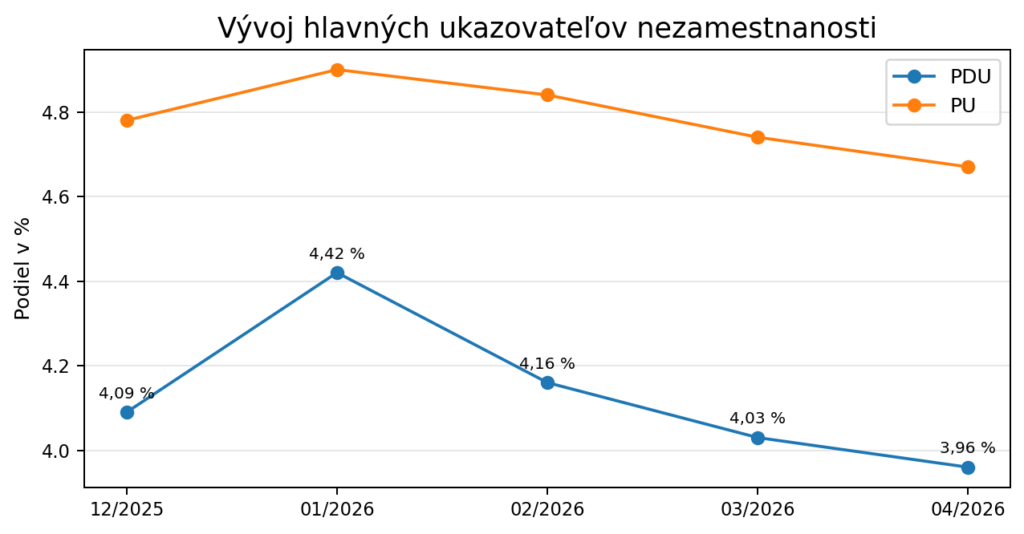
Chart 1: PDU and PU from December 2025 to April 2026
Source: ÚPSVaR; own processing.
The most important HR signal: demand for labour is growing
The number of job vacancies in April increased to 130,464. Month on month, 6,481 vacancies were added. Since the total number of registered jobseekers also declined, the ratio between candidate supply and reported vacancies worsened for employers.
There were approximately 1.29 registered jobseekers per reported vacancy. For available jobseekers of productive age, the ratio is even tighter: approximately 1.09 people per vacancy. This ratio says nothing about qualification match, commuting availability or willingness to start work, so it should be read as an indicative measure of labour market tension.
The practical impact is clear: companies waiting for a “ready-made” candidate will hit the limits of supply in many regions and professions. Employers that can make decisions quickly, offer a clear onboarding process and work with candidates who need training will be more successful.
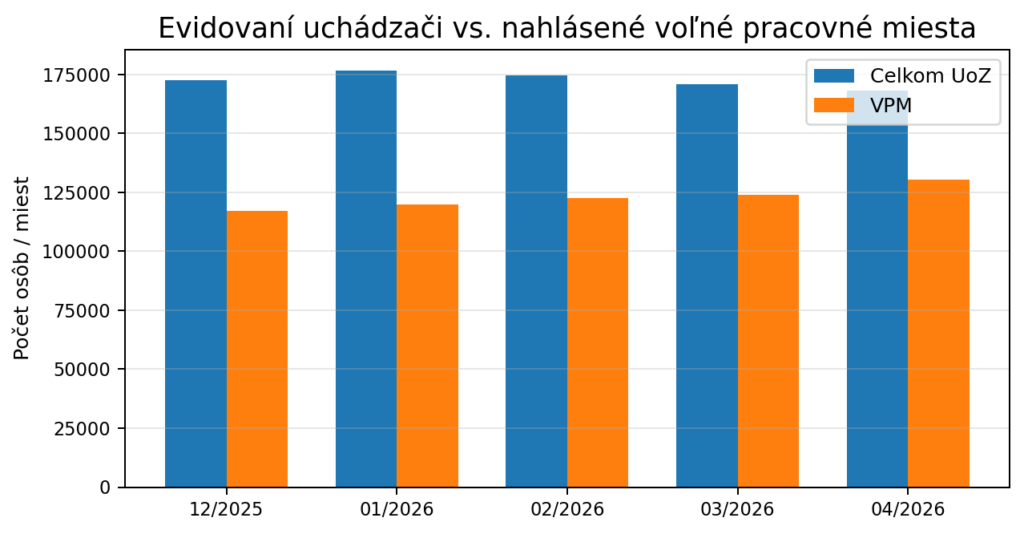
Chart 2: Registered jobseekers and reported job vacancies
Source: ÚPSVaR; own processing.
| Month | PDU | Available UoZ | Total UoZ | Vacancies | Total UoZ / Vacancies |
| 12/2025 | 4.09% | 147,628 | 172,707 | 117,271 | 1.47 |
| 01/2026 | 4.42% | 159,521 | 176,838 | 119,997 | 1.47 |
| 02/2026 | 4.16% | 149,998 | 174,767 | 122,434 | 1.43 |
| 03/2026 | 4.03% | 145,385 | 170,916 | 123,983 | 1.38 |
| 04/2026 | 3.96% | 142,802 | 168,178 | 130,464 | 1.29 |
Source: ÚPSVaR; own recalculations of the UoZ/vacancy ratio.
Young people, graduates and 50+ candidates: where the potential lies
In April, ÚPSVaR registered 37,959 jobseekers under 29, which was 879 fewer than in March. The group over 50 decreased month on month by 545 people to 50,259. The number of registered secondary school and university graduates decreased from 7,690 to 7,177.
These figures are important for HR for two reasons. First, younger candidates and graduates disappear from the register faster during periods when companies increase seasonal demand. Second, candidates over 50 represent a significant part of the register and, with properly set working conditions, training and shift patterns, can be a stable source of labour.
Chart 3: Selected groups of jobseekers in April 2026
Source: ÚPSVaR; own processing.
| Segment | April 2026 | Change m/m | Share of total UoZ | HR note |
| Under 29 | 37,959 | -879 / -2.3% | 22.6% | Suitable to target through fast onboarding, practical experience, training and partner schools. |
| Over 50 | 50,259 | -545 / -1.1% | 29.9% | Suitable for retention, stable teams, adapted onboarding and ergonomic workplaces. |
| Secondary school and university graduates | 7,177 | -513 / -6.7% | 4.3% | An important segment for trainee programmes and positions with clear training. |
Source: ÚPSVaR; shares of the total number of UoZ are based on our own recalculations.
Regional perspective: the national average is not enough
The April decline in unemployment was broad-based at the regional level, but it does not mean the same conditions for every employer. ÚPSVaR states that unemployment decreased in all regions and in most districts. The most significant month-on-month decline in PDU was in the Bratislava and Prešov regions, both by 0.10 percentage points. The smallest change was recorded in the Nitra region, by 0.04 percentage points.
For job vacancies, regional concentration is even more visible. The highest number of vacancies was in the Bratislava region, 59,875, and the lowest in the Prešov region, 3,060. For HR, this means that the nationwide average may hide the real problem: in one region there may be a surplus of reported vacancies, while in another there may be weak availability of suitable candidates or poorer commuting mobility.
For companies with several operations, it is therefore useful to monitor at least three levels of data: region, district and specific profession. Only the combination of these data points will show whether the problem lies in the number of candidates, qualifications, wage attractiveness, transport or the speed of the recruitment process.
| Regional signal from April 2026 | Value / finding | Impact for HR |
| PDU decline | In all regions and in most districts | When planning recruitment, work with local dynamics, not only the nationwide PDU. |
| Largest PDU decline among regions | Bratislava and Prešov regions: -0.10 pp | The decline may mean faster depletion of available candidates. |
| Smallest PDU decline among regions | Nitra region: -0.04 pp | In regions with smaller changes, professional and district-level differences need to be verified. |
| Highest number of vacancies | Bratislava region: 59,875 vacancies | High demand increases competition for candidates and pressure on recruitment speed. |
| Lowest number of vacancies | Prešov region: 3,060 vacancies | Fewer reported vacancies do not automatically mean easier recruitment; qualification match is decisive. |
Source: ÚPSVaR, press release for April 2026; interpretation is based on our own processing.
Sector context: wages are growing, employment not everywhere
The latest preliminary data from the Statistical Office of the Slovak Republic for March 2026 show that real wages grew year on year in 9 out of 10 monthly monitored sectors. Employment, however, grew in only 4 out of 10 sectors and fell year on year in 6 sectors.
The most significant decline in employment was in wholesale, by 3.3%. Employment also declined in industry, by 0.7%, and retail, by 1.9%. By contrast, accommodation grew by 5.5%. For HR, this is an important warning: the overall decline in unemployment does not mean the same condition across all sectors. Some companies may be dealing at the same time with labour shortages, wage growth and the need to increase productivity.
In practice, the importance of internal employee transfers, retraining and shift optimization will therefore increase. Recruitment alone may not be enough where the professional supply is narrow or where candidates do not have the required skills.
Recommendations for HR managers and employers
| Priority | What to monitor | Practical step |
| Recruitment speed | Number of UoZ per vacancy, time from contact to offer | Shorten decision-making, set pre-approved wage bands and immediate follow-up. |
| Qualification match | Difference between the UoZ profile and job requirements | Distinguish between “ready-made candidate” positions and “candidate suitable for training” positions. |
| Regional availability | Region, district, commuting, shifts | Plan recruitment by micro-region and adjust transport, accommodation or shifts. |
| Young people and graduates | Number of graduates, vacancies suitable for graduates | Offer a clear onboarding plan, mentors, simple first weeks and school partnerships. |
| 50+ candidates | Share and number of UoZ over 50 | Adapt onboarding, ergonomics, shift work and management communication. |
| Retention | Turnover, absences, reasons for leaving | Invest in team stabilization before departures have to be replaced expensively. |
| Retraining | Skills shortages within the company | Prioritize internal mobility and training over outbidding competitors for ready-made people. |
| April 2026 is a positive month for the Slovak labour market from the perspective of registered unemployment. For employers, however, it is not a signal that recruitment will become easier. The candidate pool shrank month on month, vacancies increased and the ratio of jobseekers to vacancies reached a level that forces companies to work more precisely with regions, segments and qualification match. Companies that combine fast recruitment, quality pre-selection, training, retraining and retention will have the greatest advantage. For shortage positions, it is necessary to monitor not only unemployment, but also the quality of the available workforce and candidates’ real willingness to start work. |
| Are you dealing with recruitment in a region where candidate availability is changing quickly? Manuvia helps companies combine local recruitment, international recruitment, training and follow-up care for workers so that recruitment is not only about filling a position, but about team stability. |