


February data confirm a continued seasonal increase in unemployment, but without signs of broad-based deterioration. The real story lies in regional disparities and in the mismatch between location, qualification and employer demand.
Key indicators
| Indicator | Dec 2025 | Jan 2026 | Feb 2026 |
| Share of unemployed persons | 4.8% | 5.1% | 5.2% |
| Registered job seekers | 354,314 | 378,547 | 381,705 |
| Vacancies | 87,422 | 86,431 | 89,705 |
| Benefit recipients share | 25.4% | 28.7% | 29.3% |
Table 1: Main labour market indicators.
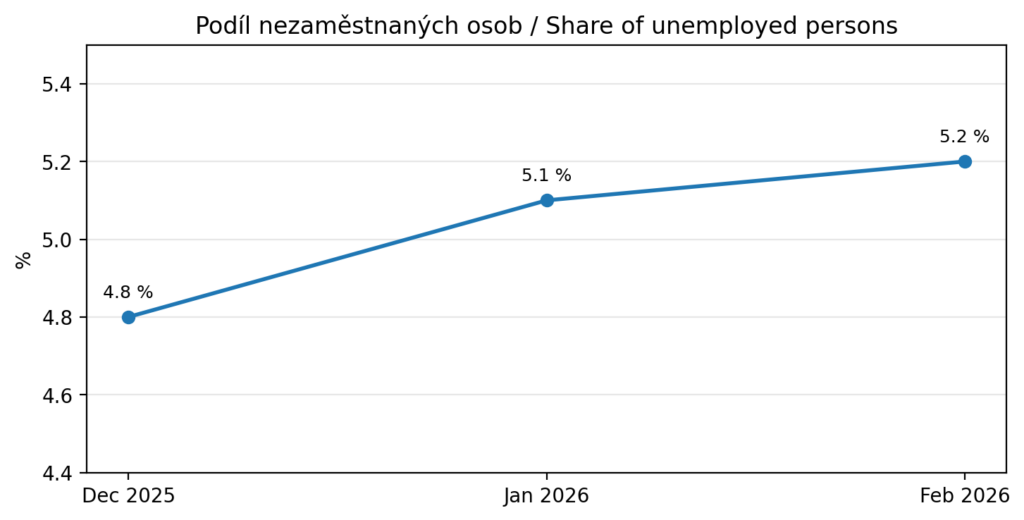
Figure 1: Three-month trend in the share of unemployed persons.
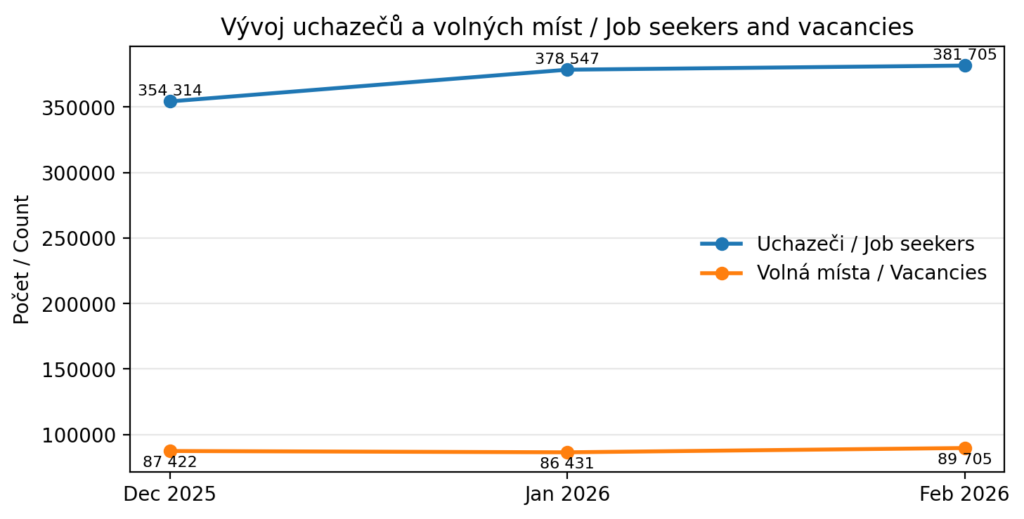
Figure 2: Registered job seekers and vacancies.
Introduction
February data confirm that the Czech labour market entered 2026 under seasonal pressure, but without signs of broad-based deterioration. As of 28 February 2026, the Labour Office registered 381,705 job seekers, which was 55,482 more than a year earlier. The share of unemployed persons increased by 0.1 percentage points month on month to 5.2%. At the same time, vacancies rose to 89,705. The core issue is therefore not only the rise in unemployment, but also the structural and regional mismatch between available labour and actual employer demand.
A calmer month after January’s jump
February did not bring another sharp deterioration after January’s increase. During the month, 43,108 people newly registered with the Labour Office, which was 21,858 fewer than in January. At the same time, 39,950 job seekers left the register and 30,033 people entered new employment. For employers, this is an important signal: the labour market remains active, but it is moving in a typical winter pattern ahead of the spring recovery of seasonal sectors.
One country, several labour markets
The national rate of 5.2% does not fully explain the real condition of the labour market. In February, the highest unemployment shares were recorded in the Ústí nad Labem Region at 7.6% and the Moravian-Silesian Region at 7.0%. At the other end were Prague at 3.9%, the Plzeň Region at 4.2%, and both the Pardubice and Central Bohemian Regions at 4.3%. The 3.7 percentage point gap between Prague and the Ústí nad Labem Region confirms that a single nationwide people strategy is no longer sufficient.
Regional differences
| Group | Region | Unemployment share |
| Highest | Ústí nad Labem Region | 7.6% |
| Highest | Moravian-Silesian Region | 7.0% |
| Lowest | Prague | 3.9% |
| Lowest | Plzeň Region | 4.2% |
| Lowest | Pardubice Region | 4.3% |
| Lowest | Central Bohemian Region | 4.3% |
Table 2: Selected regions with the highest and lowest unemployment in February 2026.
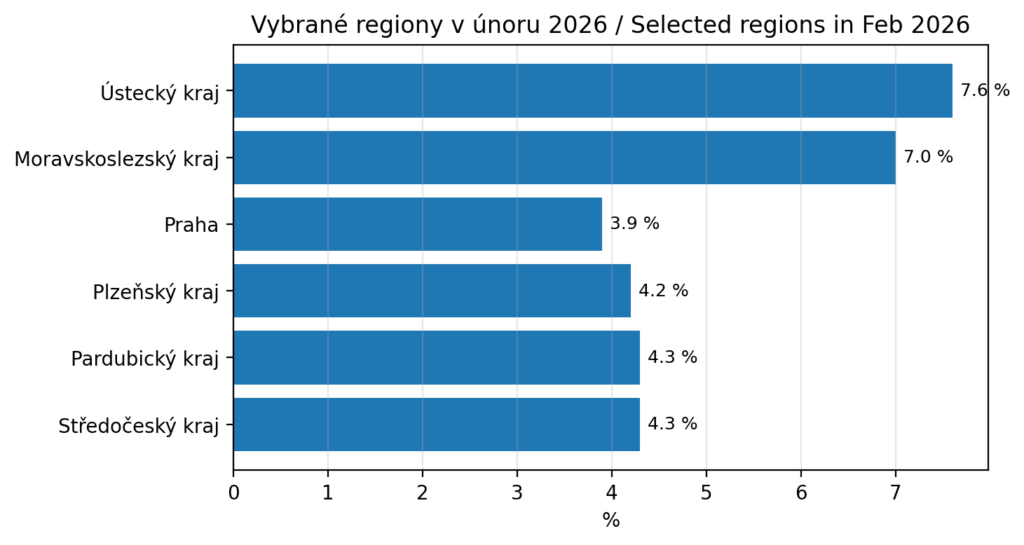
Figure 3: Selected regions with the highest and lowest unemployment.
District-level detail reveals the real tension
At district level, the highest unemployment rates were recorded in Most (10.4%), Karviná (10.3%) and Bruntál (9.4%). At the same time, districts such as Karviná, Sokolov, Děčín and Bruntál showed the highest number of applicants per vacancy. The Czech labour market therefore cannot be reduced to the claim that jobs are abundant everywhere or missing everywhere. The real issue is the mismatch between location, occupation and qualification.
Districts with the highest unemployment and vacancy pressure
| District | Unemployment share | Applicants per vacancy |
| Most | 10.4% | – |
| Karviná | 10.3% | 20.6 |
| Bruntál | 9.4% | 13.6 |
| Chomutov | 8.1% | – |
| Sokolov | 8.1% | 18.4 |
| Děčín | – | 17.1 |
Table 3: Selected districts based on February data from the Labour Office.
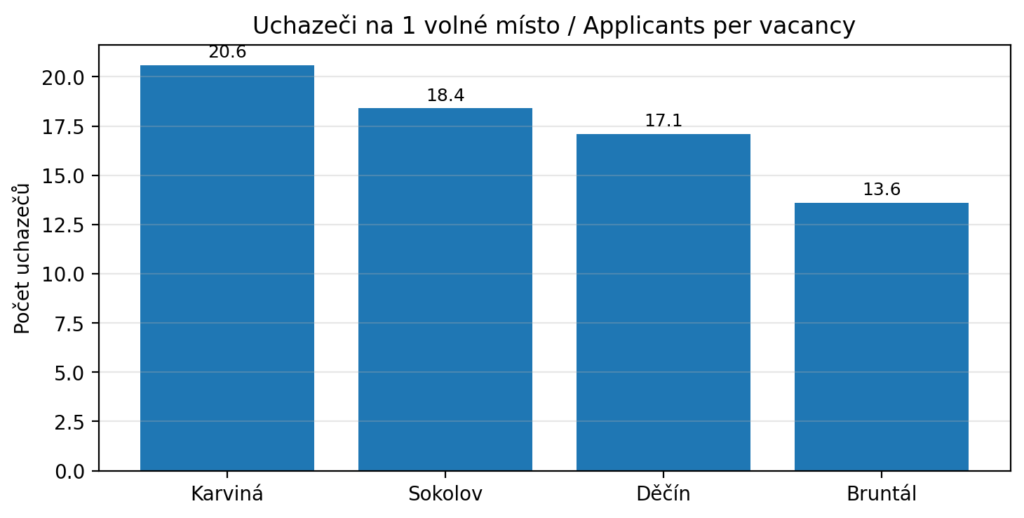
Figure 4: Districts with the highest number of applicants per vacancy.
Demand remains strong in frontline and manual roles
According to the Labour Office, employers in February showed the strongest demand for construction workers in building construction, truck and heavy goods vehicle drivers, forklift operators and warehouse staff, as well as cooks, assembly workers and cleaners. Higher registered unemployment therefore does not automatically make it easier for firms to fill critical operational roles. Speed of recruitment, effective screening and the ability to offer realistic working conditions remain decisive.
Higher benefits and the role of active labour market policy
At the end of February, 111,872 people were receiving unemployment benefits, representing 29.3% of all registered job seekers. Following the amendment effective from 1 January 2026, the maximum unemployment benefit rose to CZK 38,537. At the same time, the Labour Office supported 8,262 job seekers and applicants through active labour market policy instruments, with the highest numbers in the Central Bohemian, Ústí nad Labem and Moravian-Silesian Regions. This shows that public policy remains targeted primarily at regions facing higher unemployment risk.
Conclusion
For HR leaders and company management, the conclusion is clear: the Czech labour market in spring 2026 is neither a market without jobs nor a market without people. It is a market in which jobs and labour both exist, but increasingly fail to meet in the same place, at the same time and within the same qualification structure. The ability to bridge that gap will be one of the defining competitive advantages for employers this year.